Leo XIV to Eastern Orthodox: 'Rome, Constantinople, and All Other Sees Not Called to Vie for Primacy'
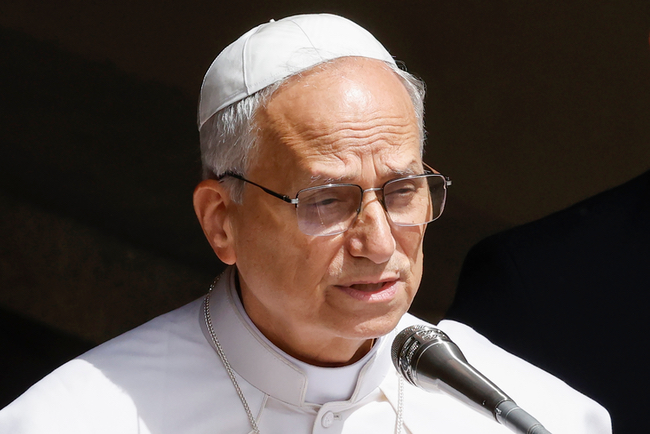
On July 13, 2025, at Castel Gandolfo, 'Pope' Leo XIV (Robert Prevost) welcomed participants from an Orthodox-Catholic ecumenical pilgrimage originating in the United States. The Vatican documented this event with several official photographs, one of which is shown below:
The Ecumenical Encounter
During this meeting, Leo XIV delivered a speech filled with the usual ecumenical language about "restoring full unity among all Christ's disciples." However, the real shock came when he addressed the topic of papal primacy—the unique authority of the Bishop of Rome (the Pope) over the entire Christian Church.
He stated:
Unity among those who believe in Christ is one of the signs of God's gift of consolation; Scripture promises that "in Jerusalem you will be comforted" (Is 66:13). Rome, Constantinople and all the other Sees, are not called to vie for primacy, lest we risk finding ourselves like the disciples who along the way, even as Jesus was announcing his coming passion, argued about which of them was the greatest (cf. Mk 9:33-37).
This statement, delivered in English to an American audience, strongly implied that Rome does not possess unique primacy over other Christian sees (such as Constantinople). The implication was clear: no single diocese, including Rome, should claim supremacy over the others.
Catholic Dogma on Papal Primacy
To understand the gravity of Leo XIV's words, it's important to recall the official Catholic teaching on this matter, as defined by the First Vatican Council:
If anyone then says that the blessed Apostle Peter was not established by the Lord Christ as the chief of all the apostles, and the visible head of the whole militant Church, or, that the same received great honor but did not receive from the same our Lord Jesus Christ directly and immediately the primacy in true and proper jurisdiction: let him be anathema.
If anyone then says that it is not from the institution of Christ the Lord Himself, or by divine right that the blessed Peter has perpetual successors in the primacy over the universal Church, or that the Roman Pontiff is not the successor of blessed Peter in the same primacy, let him be anathema.
If anyone thus speaks, that the Roman Pontiff has only the office of inspection or direction, but not the full and supreme power of jurisdiction over the universal Church, not only in things which pertain to faith and morals, but also in those which pertain to the discipline and government of the Church spread over the whole world; or, that he possesses only the more important parts, but not the whole plenitude of this supreme power; or that this power of his is not ordinary and immediate, or over the churches altogether and individually, and over the pastors and the faithful altogether and individually: let him be anathema.
(First Vatican Council, Dogmatic Constitution Pastor Aeternus, Canons of Chapters 1, 2, and 3)
In short: The Catholic Church teaches that the Pope, as the successor of Peter, has full, supreme, and universal power over the whole Church.
Analysis of Leo XIV's Statement
Some defenders of the modern Vatican might argue that Leo XIV was simply saying that dioceses shouldn't compete for primacy, since Rome already holds it. However, the article points out that:
- Leo XIV could have easily clarified that Rome alone holds primacy, but he chose not to.
- Asserting Roman primacy would have offended the Orthodox present, potentially harming ecumenical relations.
- His words suggest that no see should claim primacy, equating such claims with the disciples' argument over "who was the greatest."
This line of reasoning is not new. It echoes arguments made by Protestant reformers, such as those in the Magdeburg Centuries. St. Robert Bellarmine, a renowned Catholic theologian, refuted this view:
To the argument of the Magdeburgenses I respond that the Apostles did not clearly understand the promise made to Peter [in Matthew 16:18-19], until after the resurrection of Christ; and nevertheless they did suspect that Peter perhaps had been constituted the chief of all, and so they argued among themselves. ... And what the Magdeburgenses say is not true, namely, that the Lord had not said that Peter had already been designated as their leader. For, what is the meaning of these words in Luke 22:26: Let the greatest among you become as the youngest, and the leader as one who serves? Did he not surely call one of them greater and the leader?
The Question of True Church Unity
Leo XIV's approach also implies that Catholics and Orthodox are equally disciples of Christ. However, traditional Catholic teaching insists that the Roman Catholic Church is the one true Church. For example:
the idea that the true Church of Jesus Christ consists partly of the Roman Church spread abroad and propagated throughout the world, partly of the [Orthodox] Photian schism and the Anglican heresy, as having equally with the Roman Church, one Lord, one faith, and one baptism. To take away the dissensions which distract these three Christian communions, not without grievous scandal and at the expense of truth and charity, [this false idea of procuring Christian unity] appoints prayers and sacrifices, to obtain from God the grace of unity.
(A Letter of the Supreme Holy Roman and Universal Inquisition to all the English Bishops, Sep. 16, 1864)
Pope Pius IX, in his letter Iam Vos Omnes (1868), further clarified:
whoever will carefully examine and reflect upon the condition of the various religious societies, divided among themselves, and separated from the Catholic Church ... cannot fail to satisfy himself that neither any one of these societies by itself, nor all of them together, can in any manner constitute and be that One Catholic Church which Christ our Lord built, and established, and willed should continue; and that they cannot in any way be said to be branches or parts of that Church, since they are visibly cut off from Catholic unity.
Pope Pius XII, in 1954, also emphasized:
...it will be entirely necessary for your Christian community, if it wishes to be part of the society divinely founded by our Redeemer, to be completely subject to the Supreme Pontiff, Vicar of Jesus Christ on earth, and be strictly united with him in regard to religious faith and morals. With these words — and it is well to note them — is embraced the whole life and work of the Church, and also its constitution, its government, its discipline. All of these things depend certainly on the will of Jesus Christ, Founder of the Church.
Leo XIV's Ecumenical Approach
Leo XIV's recent actions fit a broader pattern:
- He called the Roman and Constantinopolitan sees "sister churches"—a term popularized since 1967 to describe Catholic-Orthodox relations.
- He promotes "synodality"—a more decentralized, collaborative model of church governance, which downplays papal authority.
- He aligns with recent Vatican documents that seek to reinterpret papal primacy in a way more acceptable to the Orthodox and other Christians.
This approach echoes the thinking of previous popes, especially John Paul II and Benedict XVI. For example, in Ut Unum Sint (1995), John Paul II wrote:
to find a way of exercising the [papal] primacy which, while in no way renouncing what is essential to its mission, is nonetheless open to a new situation.
Similarly, Joseph Ratzinger (later Benedict XVI) wrote in Principles of Catholic Theology:
...Rome must not require more from the East with respect to the doctrine of primacy than had been formulated and was lived in the first millennium. ... it would be worth our while to consider whether this archaic confession, which has nothing to do with the "primacy of jurisdiction" [defined at Vatican I] but confesses a primacy of "honor" and agape [love], might not be recognized as a formula that adequately reflects the position Rome occupies in the Church...
Summary and Key Takeaways
- Leo XIV's statement at Castel Gandolfo downplays the unique primacy of Rome, suggesting that no see should claim supremacy.
- This contradicts traditional Catholic dogma, which holds that the Pope has full and supreme authority over the universal Church.
- His approach is part of a broader trend in the modern Vatican to reinterpret papal primacy for the sake of ecumenical relations, especially with the Eastern Orthodox.
- Traditional Catholic teaching insists that unity with the Pope is essential for belonging to the true Church of Christ.
"Let him be anathema!"
This strong condemnation, echoing the language of the First Vatican Council, underscores the seriousness with which traditional Catholics view any denial or dilution of papal primacy.
In essence: Leo XIV's words and actions represent a significant shift away from the traditional Catholic understanding of the papacy, favoring a more ecumenical and less hierarchical approach. This has sparked concern and criticism among those who hold to the historic teachings of the Church.
Need a summary like this?
Get instant summaries with Harvest