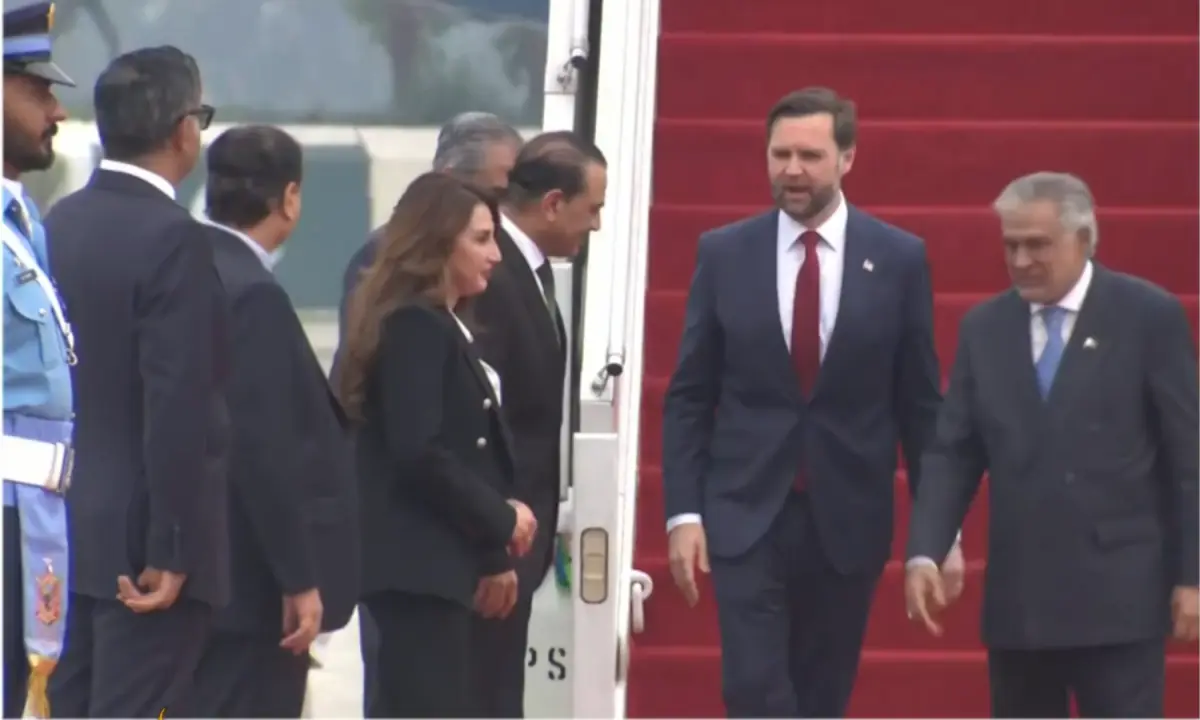
US Vice President JD Vance Arrives in Islamabad for 'Make-or-Break' Talks with Iran
This document covers the historic, high-stakes negotiations between the United States and Iran taking place in Islamabad, Pakistan, following a temporary ceasefire brokered in April 2026. Led by US Vice President JD Vance and Iranian Parliament Speaker Mohammad Bagher Ghalibaf, these talks mark the first direct high-level engagement between the two nations since 1979. While both sides are finally at the table, deep-rooted mistrust and complex demands regarding military actions, nuclear programs, and financial sanctions make an immediate breakthrough challenging.
1. Setting the Stage for Historic Diplomacy 🤝
On a Saturday morning, US Vice President JD Vance and his delegation touched down in Pakistan to kick off unprecedented talks with Iranian leadership. Upon arriving at the Nur Khan Air Base, Vice President Vance was warmly welcomed by Pakistan's Deputy Prime Minister Ishaq Dar and military leader Field Marshal Asim Munir. 🛬
To understand why this meeting is such a massive deal, we have to look back just a few months. Earlier this year, on February 28, a major conflict broke out involving US and Israeli attacks on Iran. This conflict sent shockwaves through the Middle East and heavily rattled global economies. Fortunately, Pakistan stepped in as a peacemaker and successfully brokered a temporary, two-week ceasefire that went into effect on April 8.
These talks are happening right in the middle of this crucial pause in the fighting. However, getting everyone to the table wasn't easy at all. The Iranian delegation almost didn't show up because of ongoing Israeli military strikes in Lebanon. Iran made it very clear that they would only participate if those attacks stopped—a condition that Pakistan confirmed was actually part of the original US-Iran ceasefire agreement.
2. Key Players at the Table 💼
This meeting is incredibly significant because it marks the very first time Washington and Tehran have engaged in direct, high-level talks since 1979!
Here is a quick look at who is leading the discussions for both sides:
- The US Team: Led by Vice President Vance, the delegation also features President Donald Trump's son-in-law Jared Kushner and Middle East envoy Steve Witkoff. They are backed by various officials from the National Security Council, the State Department, and the Department of Defence.
- The Iranian Team: Leading the charge is Parliament Speaker Mohammad Bagher Ghalibaf, accompanied by Foreign Minister Abbas Araghchi. Other key negotiators include top defense official Ali Akbar Ahmadian and the head of Iran's central bank, Abdolnaser Hemmati.
3. Strict Conditions and Red Lines 🛑
Before sitting down, Iran had some very strict requirements. Parliament Speaker Ghalibaf stated that Iran's involvement depended entirely on two things: stopping the conflict in Lebanon and releasing about $7 billion of Iranian money that is currently locked up in foreign banks (often called "frozen assets"). He emphasized that these steps:
"must be fulfilled before negotiations begin"
An Iranian official further highlighted how serious they were about protecting their regional allies in Lebanon, stating:
"We forced a pause in attacks in Beirut and Dahieh by making it a red line in negotiations and also made it clear that if Israel crosses it again, talks would be off."
While Iran wants the ceasefire to cover all fronts, including allies like Hezbollah, the US and Israel initially tried to treat the Lebanon situation as outside the scope of the peace deal. This major disagreement has been a constant threat to the diplomatic process.
4. The Complex Agenda Ahead 📋
Both sides are coming into these talks with completely different goals, though they are basing their discussions on a 10-point proposal from Iran that the US accepted as a general starting point.
- What the US Wants: The United States is heavily focused on placing strict limits on Iran's nuclear program. This includes restricting "enrichment" (the technical process used to create nuclear energy or weapons) and potentially removing existing nuclear materials from Iran.
- What Iran Wants: On the flip side, Iran is demanding the complete removal of international punishments (sanctions), the official recognition of their right to maintain a nuclear program, access to their frozen money, and a clear set of rules for ships traveling through the Strait of Hormuz—a highly crucial waterway for global oil trade.
Before leaving Washington, Vice President Vance tried to stay optimistic, calling the expected talks "positive" and promising that the US was ready to negotiate fairly. However, he warned that the US wouldn't tolerate any attempts by Iran to intentionally delay the process.
President Trump took a much tougher stance. He criticized Iran for continuing to restrict ships in the Strait of Hormuz and issued a stern warning that military action could easily resume if talks fail, noting that Iran did not have:
"many cards"
5. Wrapping Up: Cautious Optimism 🌍
Pakistan's Prime Minister Shehbaz Sharif, whose country played a central role in making these talks happen, promised that Pakistan would:
"try its level best"
He views these negotiations as a valuable opportunity to resolve:
"contentious issues through dialogue"
Despite this historic step forward, experts and officials are keeping their expectations realistic. Because the list of disagreements is so long and complex—ranging from nuclear rights to missile limits and regional alliances—it is highly unlikely that all problems will be solved during this initial two-day meeting.
The best-case scenario for this opening round is that both sides agree on a roadmap for future talks or establish some basic ground rules to keep the current peace. Seeing both sides in Islamabad is undoubtedly a rare and hopeful diplomatic victory, but the path forward remains incredibly fragile due to deep mistrust and ongoing regional tensions.
Need a summary like this?
Get instant summaries with Harvest