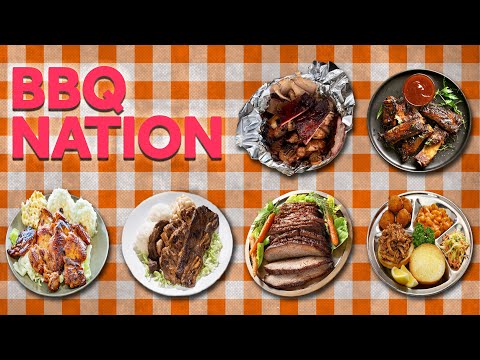
Every BBQ Style We Could Find In the United States
This comprehensive guide explores the rich and incredibly diverse world of American barbecue, tracing its regional flavors from coast to coast. From the beef-centric pits of Texas to the unique white sauces of Alabama and the plantation-era plate lunches of Hawaii, BBQ is a delicious reflection of immigration, geography, and cultural fusion. Discover how local wood, specific cuts of meat, and secret sauce recipes have shaped these iconic culinary traditions.
1. The Lone Star Legend: Texas Barbecue 🤠
When many people think of barbecue, their minds immediately drift to the Lone Star State. Texas takes immense pride in its grill culture, but the style actually shifts dramatically depending on which part of the state you are visiting.
- East Texas Style: Deeply rooted in the traditions of enslaved African Americans who worked the region's historic plantations, East Texas barbecue utilizes deep, wood-burning pits filled with pecan or hickory wood. Here, beef and pork are slow-cooked until the meat literally falls off the bone. It is famously served as chopped meat sandwiches or tender pulled pork. Further south near Louisiana, you will even find Cajun-style influences like Boudin sausage sharing the grill.
- Central Texas Style: This is the land of the legendary slow-cooked beef brisket. Central Texas BBQ lets the meat itself take center stage, seasoned simply with a "dalmatian rub" of salt and pepper before being smoked over oak wood at low heat for hours—sometimes even days!
"Central Texas is most associated with slow cooked brisket, seasoned with salt and pepper before being smoked over oak at low heat for hours or even days... the meat itself takes center stage. It's served with minimal or no sauce, letting the smoke, pepper, and meat do all the talking."
This style was heavily influenced by German and Jewish immigrants who settled in the area as cattle ranchers during the mid-19th century. They cleverly adapted their traditional European pork recipes to utilize the abundance of local beef.
- West Texas Style: Leaning heavily into cowboy and frontiersman heritage, this style is cooked directly over high heat fueled by mesquite wood. This direct-flame method cooks the meat (usually sausage, ribs, and chicken) much faster than the slow-and-low methods of the East.
- South Texas (Barbacoa) Style: Along the Mexican border, pitmasters draw inspiration from Barbacoa—a Caribbean cooking style popularized in Mexico. Traditionally, sheep or goat is slow-steamed in a brick-lined pit dug into the ground, covered with agave leaves and mesquite coals, resulting in incredibly succulent meat.
2. The Sweet and Savory Hub: Memphis Barbecue 🎸
Long before it was famous for Elvis Presley, Memphis, Tennessee was a bustling port city along the Mississippi River. This strategic location made it a major trading hub for rare, exotic spices, molasses, and unique ingredients that weren't easily found in other parts of the country. This historical access paved the way for Memphis's signature sweet and richly spiced flavor profile.
"Memphis Tennessee was an important port off the Mississippi River. It became a hub for rare spices and sauces... Memphis Barbecue retains a distinctive sweet flavor."
In Memphis, pork is the undisputed king—specifically pork ribs and pulled pork. Pitmasters rub the meat down with a heavy, savory spice blend featuring plenty of paprika, then cook it slow. It is often finished with a light mopping of a tangy, sweet vinegar-and-tomato-based sauce.
Further out in West Tennessee, rural communities favor Whole Hog Barbecue. In this highly sustainable, nose-to-tail tradition, an entire pig is cooked at once, and all the meat is shredded together, tossed with a peppery, acidic vinegar sauce, and served with a side of cool coleslaw.
3. The Industrial Twist: Chicago Barbecue 🏙️
Moving up north, Chicago's barbecue scene is a fascinating byproduct of its history as an immigration gateway and its legacy as the meatpacking capital of North America. The city is split into two distinct styles:
- The South Side: Known for using cheaper cuts of meat, like rib tips and beef tips, smoked over direct heat and smothered in a thick, sweet sauce.
- The North Side: Favors European-style sausages and boiled meats.
Because the chilly Great Lakes climate makes outdoor pit cooking difficult for much of the year, Chicago cooks adapted by using indoor propane smokers and wood-burning ovens. This environmental hurdle gave birth to the iconic Aquarium Smoker—a massive, glass-walled indoor smoker with a distinct smokestack that vents right through the restaurant's roof.
"The most iconic of these indoor smokers is called the aquarium smoker, which you can spot jutting a smokestack through the roof of any respectable Chicago barbecue joint."
4. The Saucy Capital: Kansas City Barbecue ⚜️
Kansas City, Missouri earned its reputation as a barbecue mecca thanks to its 19th-century boomtown status. As a major railway hub, it connected Western livestock breeders directly with East Coast meat consumers.
The soul of Kansas City barbecue was crafted by its Black American residents, spearheaded by a legendary restaurateur named Henry Perry, widely celebrated as the "Father of Kansas City Barbecue."
"Kansas City's barbecue style was heavily influenced by the traditions of the area's black American residents and was defined in large part by a single man, restaurateur Henry Perry, commonly known as the father of KC barbecue."
In the early 1900s, Perry operated a barbecue joint in a racially segregated neighborhood. He pioneered the city's signature style: ultra-thick, sweet, tomato-and-molasses-based sauces slathered over beautifully smoked meats. His techniques were passed down directly to legendary local disciples like Arthur and Charlie Bryant, as well as Ollie Gates, cementing Kansas City's place on the culinary map.
5. The Colonial Pioneer: Virginia Barbecue 🍂
Virginia may be smaller in size than Texas, but it boasts a complex, shifting "kaleidoscope" of regional BBQ flavors. In the north, you will find sweet, tomato-based sauces; in the central regions, you might encounter unusual additions like root beer or peanut butter; the south favors vinegary, mustard-laced sauces; and the Shenandoah Valley is famous for a unique blend of local herbs and spices.
Rather than smoking, Virginians traditionally prefer to cook over open fire pits. In fact, many food historians believe that modern American barbecue actually originated right here, adapted from the indigenous Powhatan tribes who roasted meats on wooden grills long before European settlers arrived.
Founding fathers like George Washington and James Madison were known to host massive, festive barbecue gatherings during the colonial era, making Virginia BBQ an essential piece of American history.
6. The Great Divide: Carolina Barbecue 🐷
The Carolinas are home to one of the oldest and most passionately debated barbecue rivalries in the United States, divided by geography, meat preferences, and sauces.
North Carolina
- Western North Carolina: Often called the "Lexington style," this region is famous for using a sweet, tangy, ketchup-based sauce that gives the meat a vibrant red hue. Pork shoulder is the preferred cut. This style was highly influenced by German and Bavarian immigrants who arrived around World War I and introduced traditional sweet-and-sour pork dishes.
- Eastern North Carolina: Favors the whole hog, dressed in a very simple, sharp, and fiery vinegar-and-pepper-based sauce with absolutely no tomato or ketchup allowed!
South Carolina
South Carolina is proudly "pig country," where pitmasters favor slow-cooked pulled pork or whole-hog barbecuing over smoky pits. What truly sets South Carolina apart is its famous mustard-based barbecue sauce (often called "Carolina Gold"). This bright yellow, tangy sauce is another brilliant contribution from the region's historic German immigrant population.
"When it comes to barbecue in South Carolina, you should know this is pig country... the region is particularly known for its frequent use of mustard-based sauces, another contribution from German immigrants."
7. Island Fusion: Hawaiian Barbecue 🍍
Because of its tropical weather, Hawaii enjoys a year-round outdoor cooking culture. Positioned at the geographic crossroads of Asian and North American trade, Hawaiian barbecue is a gorgeous tapestry of global influences, combining flavors from China, the Philippines, Korea, Portugal, and the American South.
Ribs are typically prepared with sweet soy-based Chinese or Korean glazes, and barbecued seafood is a common staple. However, Hawaii's most famous culinary contribution is the iconic Plate Lunch, which originated in the late 19th century on the islands' sugar and pineapple plantations.
"Situated at the geographical epicenter of Asian and North American traditions, Hawaiian Barbecue preferences have been shaped as much by China, the Philippines, and Korea as the American South..."
Immigrant workers brought bento boxes filled with rice and leftover meats to work. By the 1930s, mobile "lunch wagons" began selling these cheap, satisfying meals on compartmentalized paper plates. Today, a traditional Hawaiian plate lunch consists of:
- A protein (such as smoky Kalua pork, spam musubi, or Loco Moco—a hamburger patty topped with a fried egg and rich gravy).
- Two scoops of white rice.
- A generous scoop of creamy, cool macaroni salad.
8. The White Sauce Wonder: Alabama Barbecue 🍗
While Alabama's basic meat preferences closely mirror its neighbors—focusing heavily on tender pork shoulder and smoked chicken—the state has earned worldwide culinary fame for one highly unique, game-changing creation: Alabama White Sauce.
Created by pitmaster Bob Gibson in 1925, this legendary sauce breaks all the traditional BBQ rules. Instead of tomatoes, mustard, or molasses, this creamy, tangy sauce is made from a base of:
- Mayonnaise
- Vinegar
- Salt
- Coarse black pepper
It is traditionally dunked over freshly smoked chicken or pork, adding a rich, zesty moisture that is unlike any other barbecue style in the country.
9. The Out-of-the-Box Choice: Kentucky Barbecue 🐑
Kentucky likes to do things a bit differently, stepping away from the standard beef and pork monopoly to highlight a highly unusual protein choice: mutton (mature sheep meat).
"Mutton is a common dish at many local restaurants, marinated in a combination of Worcestershire and vinegar before being smoked over hickory wood."
Because mutton has a very strong, gamey flavor, it is marinated in a robust, savory "black dip" made of Worcestershire sauce and vinegar, which helps tenderize the meat before it is smoked over dense hickory wood. Other local Kentucky favorites include thinly sliced barbecue turkey, ham sandwiches, and a wedge-cut of pork shoulder affectionately known as the "Boston butt."
10. West Coast Ranching: California's Santa Maria Style 🌊
While California is highly praised for its fresh produce and gourmet pizzas, the state's Central Coast boasts a deeply rooted, historic cattle-ranching culture dating back to the Spanish rancheros. Out of this heritage emerged the Santa Maria Style of barbecue.
Unlike the low-and-slow wood smokers of the South, Santa Maria barbecue is cooked over an open pit of native red oak coals. The star of the show is the beef tri-tip—a distinct, triangular cut of sirloin.
"One popular California barbecue dish is beef tri-tip prepared with a dry rub of salt, pepper, and garlic salt before being smoked over a bed of red oak coals."
The tri-tip is seasoned with a simple, savory dry rub of salt, black pepper, and garlic salt. Keeping with local tradition, it is sliced thin and served alongside pinto beans (specifically local pinquito beans), a fresh green salad, garlic bread, and warm tortillas.
Wrapping Up 🍽️
American barbecue is far more than just grilling meat over a fire; it is a living history book on a plate. Shaped by geography, local wood species, and the diverse culinary traditions of global immigrants, each region has created something entirely its own. Whether you prefer the purist, pepper-crusted beef brisket of Central Texas, the sweet molasses-infused pork of Kansas City, or the tangy mayonnaise-based white sauce of Alabama, there is a seat at the table—and a unique flavor profile—for every food lover across the United States.
Need a summary like this?
Get instant summaries with Harvest