
Does the Cambrian Explosion Pose a Challenge to Evolution? - Common Question - BioLogos
The Cambrian Explosion, a period about 543 million years ago where most major animal body plans appeared in the fossil record within a relatively short span of 20 million years, presents intriguing questions for evolutionary biology. While its rapid changes might seem inconsistent with gradual evolution, scientists generally agree that it doesn't challenge the core concept of evolution, but rather offers exciting opportunities to deepen our understanding of how life diversified. This article explores why the Cambrian Explosion, despite its unique characteristics, aligns with evolutionary theory and highlights the ongoing research that continues to shed light on this pivotal period.
1. Understanding the Cambrian Explosion 🧐
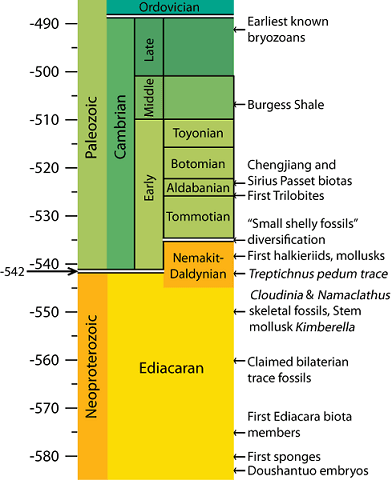
The term "Cambrian Explosion" refers to a fascinating period starting around 543 million years ago. During this time, the fossil record suddenly shows the appearance and quick diversification of most of the major animal body plans (scientists call these 'phyla'). This burst of new life forms happened incredibly fast in evolutionary terms—within about 20 million years or even less! 🚀
We know about this period thanks to some truly spectacular fossil sites, like the Burgess Shale in Canada and the Chengjiang in China, which have preserved these early animals wonderfully. It's important to note that this wasn't the very beginning of multicellular animal life; those records go back at least 30 million years earlier.
One common idea is that the Cambrian Explosion challenges evolution because such a rapid burst of change seems to go against the usual, more gradual pace of evolutionary change. However, as the article points out:
"The Cambrian Explosion does present a number of interesting and important research questions. It does not, however, challenge the fundamental correctness of the central thesis of evolution."
While it was a fast period of change, the fossil record actually shows other times of rapid evolutionary bursts, often right after big extinction events. This period is super important because it's when the main branches of the animal family tree really got established. And even though it seems quick, millions of years is plenty of time for these new body plans to evolve! Plus, we have lots of fossil examples that show transitional forms between different animal phyla and their common ancestors. Studying the Cambrian period is an exciting way to learn more about how evolution works and what environmental factors shaped it.
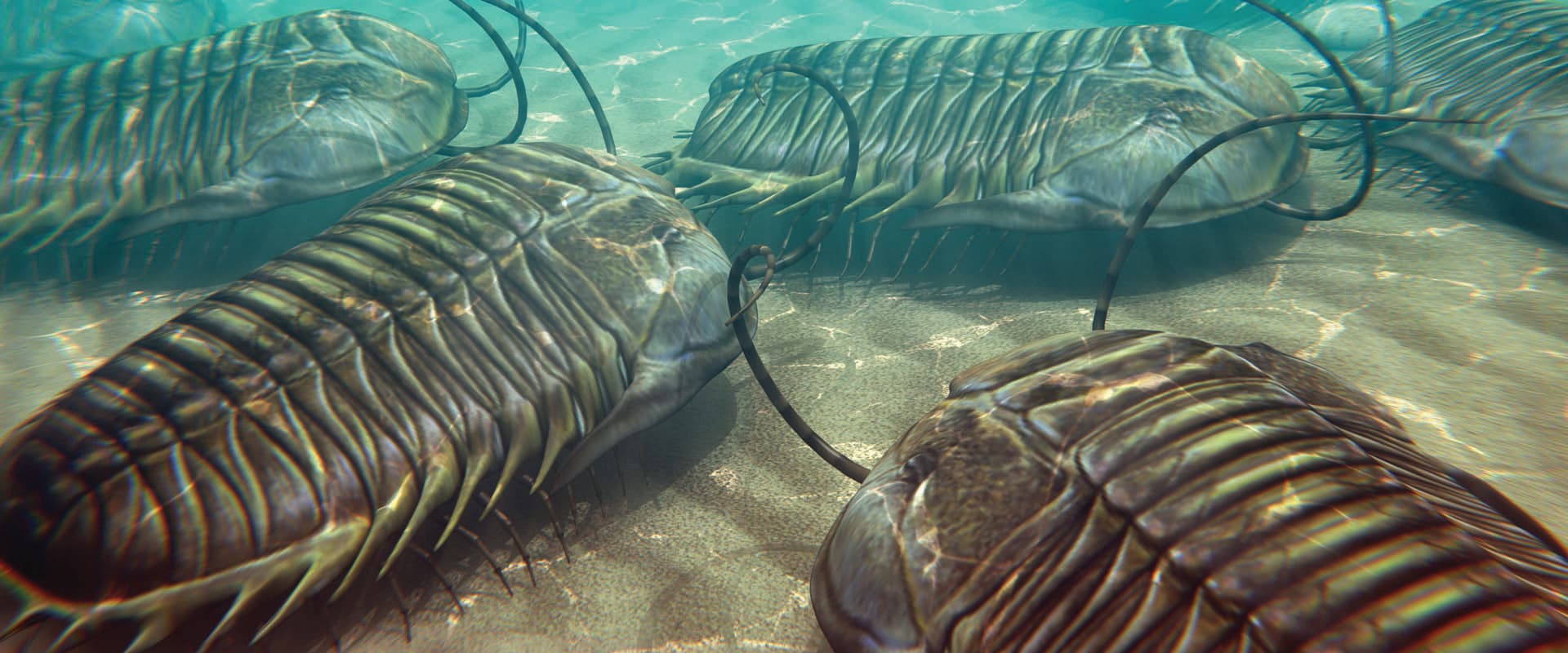 Artistic rendering of trilobites on sea-bottom during Cambrian Period
It's also worth clarifying that the major animal body plans that showed up during the Cambrian Explosion weren't modern animals like starfish, crabs, insects, fish, lizards, birds, or mammals. Those groups appeared much, much later! The Cambrian forms were more primitive, and many were soft-bodied. However, they did have the basic features that define the big branches of life that later, more complex forms would belong to. For instance, vertebrates (like us!) are part of the Chordata group, characterized by a nerve cord, gill pouches, and a notochord (a support rod). In the Cambrian fossils, we find soft-bodied creatures with these foundational characteristics, even though the modern groups of vertebrates came much later. Many Cambrian organisms, while foundational, didn't have all the defining characteristics of modern animal body plans; those developed over a much longer period.
2. Different Takes on the "Cambrian Explosion" 🤯
Not everyone agrees that the Cambrian Explosion was unusually rapid in its evolutionary transitions. Here are a couple of viewpoints:
2.1. The Incomplete Fossil Record Argument
The fossil record is, by its nature, incomplete—especially when it comes to small, soft-bodied creatures that don't preserve well. Some researchers suggest that the apparent "explosion" of new body plans might just be because the rate of fossilization increased during that time. Why? Well, during the Cambrian, many animals started evolving skeletons and other hard, mineralized structures (like spines, spicules, or plates), which fossilize much more effectively than soft tissues. So, it might look like there was a sudden appearance of new forms simply because more things were getting fossilized! There were also significant changes in marine environments and chemistry from the late Precambrian into the Cambrian, which could have encouraged the development of these mineralized skeletons in previously soft-bodied organisms.
2.2. A Significant Event and Ongoing Research
Despite the debates, most scientists agree that something significant really did happen at the dawn of the Cambrian era. They see the Cambrian Explosion as a super exciting and productive area for research. For example, recent fossil discoveries are helping us understand what life was like before the Cambrian Explosion. We're finding more soft-bodied organisms from the Precambrian era, like those in the Ediacaran Assemblages found worldwide. These late Precambrian fossils even include early sponges, cnidarians (jellyfish, corals), mollusks, and various worm-like groups.
Crucially, some of these new fossil discoveries appear to be more primitive ancestors of the later Cambrian body plans. This is a big deal because it shows that:
"The discovery of such precursors shows that the Cambrian organisms did not appear from thin air."
These findings strongly suggest a continuous evolutionary lineage rather than a sudden, unexplained appearance. More discoveries are sure to come, further clarifying the connections between Precambrian organisms and those found in famous Cambrian sites like the Burgess Shale and Chengjiang.
Genomic studies also add to our understanding. While genetic divergence (when species split genetically) would have happened before we see new body plans in the fossil record, the accumulating genetic data largely supports what the fossils tell us. Both the fossil record and genomic studies point to the rise of bilateria (animals with bilateral symmetry, like most invertebrates) in the very late Precambrian Ediacaran period, followed by their incredible burst of ecological diversity in the Cambrian.
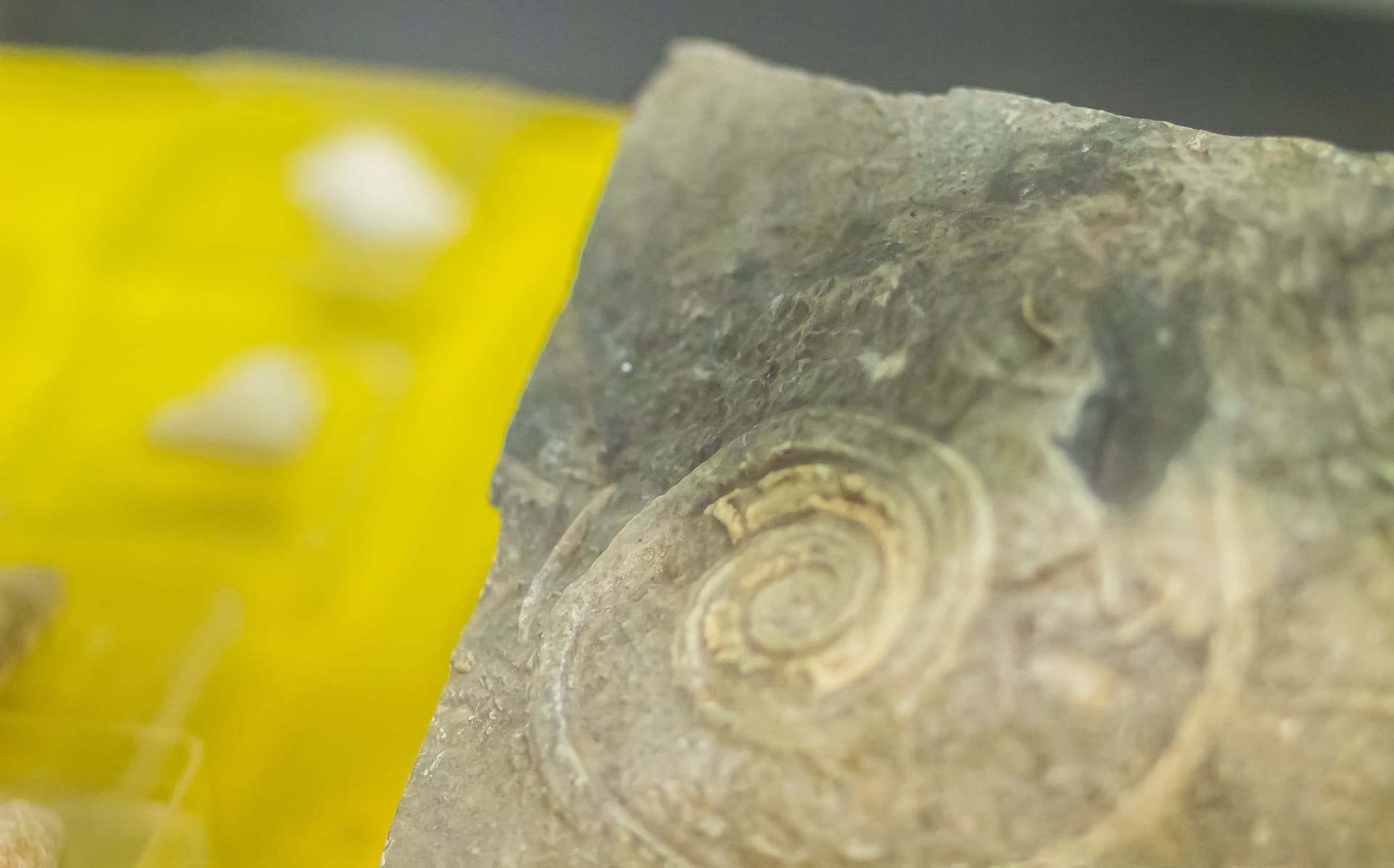 Gastropod shell fossil dated back to the early Cambrian.
3. Unanswered Questions 🤔
Even though the "suddenness" of the Cambrian Explosion wasn't truly sudden in evolutionary terms (it spanned millions of years!), it's still a head-scratcher why such massive changes occurred during this particular period, especially after animal body plans had remained relatively stable for millions of years beforehand. The big questions that remain are:
"What triggered the Cambrian Explosion? And why did so much change occur at this time?"
Scientists have several theories that propose dramatic environmental changes opened up new opportunities for natural selection to drive rapid evolution. Here are a few:
- Runaway Glaciation Theory: This idea suggests that glaciers briefly covered much of the Earth. The massive loss of habitat would have created bottlenecks, situations where populations are drastically reduced, which can accelerate evolutionary change.
- Atmospheric Oxygen Changes: Another theory posits that a significant increase in atmospheric oxygen levels could have fueled this burst of evolutionary innovation. More oxygen might have allowed for larger and more metabolically active organisms to evolve.
- Seafloor Changes: A third proposal suggests that major changes in the seafloor itself played a role. The late Precambrian seafloor was often covered by algae mats, but in the Cambrian, it transitioned to soft muddy bottoms. This change could have had dramatic evolutionary and ecological impacts, opening up new niches and ways of life.
4. The Cambrian Era Fossils: Providing Answers 🧩
While the exact causes of the Cambrian Explosion are still a subject of exciting debate, the continuous discovery of new fossils from both the Cambrian and Precambrian Eras is steadily piecing together this evolutionary puzzle. These fossils are incredibly valuable because they help us visualize the common ancestors of very diverse groups of animals.
For example, vertebrates (like fish) and echinoderms (like sea urchins and starfish) belong to a larger group called deuterostomes. Without fossil evidence, it's really hard to imagine what a common ancestor for such different creatures might have looked like. But the Cambrian fossils are helping to fill in that picture, giving us crucial insights into these ancient relationships. The more we find, the clearer our understanding becomes!
Wrapping Up 🎉
The Cambrian Explosion, while a period of remarkable and rapid diversification in Earth's history, is consistently shown by ongoing research and fossil discoveries to be a critical chapter within the grand narrative of evolution. It poses fascinating questions about the triggers of rapid evolutionary change and environmental influences, but it does not undermine the fundamental principles of descent from a common ancestor. Instead, it serves as a vibrant area of scientific inquiry, continuously enriching our knowledge of life's intricate evolutionary journey.
Need a summary like this?
Get instant summaries with Harvest