
Fairy - Wikipedia
Fairies are mythical, human-like beings from European folklore characterized by magical powers and a variety of origins, ranging from demoted angels to nature spirits. Throughout history, they have evolved from dangerous supernatural entities to the diminutive, winged figures common in modern children's literature and art. Today, they remain a significant cultural icon, appearing in everything from classical literature to contemporary fantasy media.
1. Defining the Fairy
A fairy (also known as a fay or faerie) is a mythical being generally described as having human-like features and supernatural qualities. While deeply rooted in European cultures—including Celtic, Slavic, Germanic, and French—their description varies. Sometimes the term refers specifically to human-looking magical beings, while other times it acts as a broad category for all sorts of creatures like goblins and gnomes. 🧚
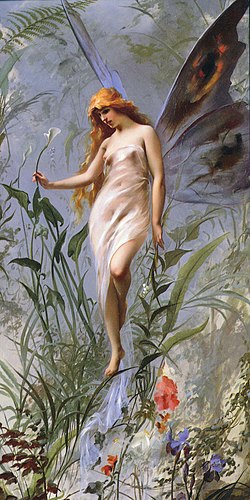
The word "fairy" comes from the Old French faerie, which is derived from fata, the Latin word for "fate." Historically, a "fay" was a beautiful woman who could use magic to influence human affairs. Over time, "fairy" became a name for the beings themselves, the places they inhabited (Fairyland), and even an adjective for things that were enchanted.
2. Historical Roots and Evolution
The origin of fairy myths is not found in a single source but is a collection of disparate folk beliefs. Some historians believe they were influenced by the Peris of Persian mythology—beautiful, winged nature spirits. In the Middle Ages, fairies were often depicted as knights or queens in romantic literature. However, by the Victorian era, tastes shifted, and fairies became smaller and more "child-friendly," leading to the modern concept of the fairy tale. 📚
During the Celtic Revival, fairies were reclaimed as a vital part of cultural heritage. In Ireland, they were linked to the aes sídhe (people of the fairy hills). Historians suggest the fascination with fairies during the Industrial Revolution was a reaction against the loss of old folk ways and the rapid growth of technology.
3. Diverse Theories on Their Origins
Because fairy lore is so vast, many different theories exist regarding where they actually come from. These beliefs often reflect the religious and social environments of the time:
- Demoted Angels: A Christian tradition suggests that when God closed the gates of Heaven during the angelic revolt, those caught in the middle became fairies.
- Pagan Deities: As Christianity spread, older gods of nature were "demoted" in status until they were viewed as mere fairies.
- Demons: Especially during the rise of Puritanism, many viewed all fairies as malevolent spirits or demons.
- Spirits of the Dead: Many folk beliefs equated fairies with the "untimely dead" or people who died with unfinished lives.
- The Hidden People: An archaeological theory suggests that fairies are actually folk memories of prehistoric races who were driven underground by invaders with superior iron weapons.
- Elementals: Thinkers like Paracelsus viewed them as intelligent species distinct from humans that personify forces of nature, like the air or earth.

4. Characteristics and Protective Lore
In folklore, fairies are not always the "sweet" beings we see in movies today. They could be quite malicious. People used various charms to protect themselves, such as cold iron, church bells, or wearing clothes inside out. Fairies were blamed for many misfortunes, from leading travelers astray with will-o'-the-wisps to "stealing" healthy babies and replacing them with changelings (deformed or sickly fairy replicas). 👶
Fairies were also known for their physical traits:
- They often used magic to hide their true form.
- Wings are actually a modern addition; in old folklore, they flew using magic or by riding birds and ragwort stems.
- Fairy gold was notoriously deceptive, turning into leaves or worthless ginger cakes shortly after being received.
5. Fairies in Literature and the Arts
From Shakespeare to J.M. Barrie, fairies have been a staple of creative writing. In A Midsummer Night's Dream, Shakespeare explored the tension between the fairy world and reality. Later, the Victorian era produced a boom in "Fairy Painting," with artists like Richard Dadd giving them a sinister edge, while others like Cicely Mary Barker created the famous, innocent Flower Fairies.
When the first baby laughed for the first time, his laugh broke into a million pieces, and they all went skipping about. That was the beginning of fairies.
Barrie's Tinker Bell eventually became a global icon, representing the "diminutive and pretty" version of the fairy that persists today. 🎨

6. Christian and Modern Philosophical Perspectives
Surprisingly, not all Christian thinkers dismissed fairies as demons. Some, like C.S. Lewis and J.R.R. Tolkien, discussed them as "Long-livers"—beings with a real, non-metaphorical connection to the countryside. ✝️
Tolkien once remarked to me that the feeling about home must have been quite different in the days when a family had fed on the produce of the same few miles of country for six generations, and that perhaps this was why they saw nymphs in the fountains and dryads in the woods – they were not mistaken for there was in a sense a real (not metaphorical) connection between them and the countryside.
Even in 2026, some theologians like David Bentley Hart argue for the reality of these spirits in a philosophical sense:
Of course mermaids exist. Or, to be more precise, of course water spirits and magical marine beings of every kind are real and numerous and, in certain circumstances, somewhat dangerous.
Conclusion
The fairy is a complex figure that has transitioned from a powerful, often fearsome nature spirit to a symbol of childhood wonder. Whether viewed as historical "hidden people," religious "fallen angels," or literary metaphors, fairies continue to capture the human imagination across the globe. ✨
Need a summary like this?
Get instant summaries with Harvest