
Synchronicity: Jung's Theory of Meaningful Coincidence
Synchronicity is Carl Jung's idea that two events can occur together in a way that feels deeply meaningful, even though no ordinary cause-and-effect link between them can be found. Developed through Jung's engagement with the I Ching, philosophy, psychology, and his collaboration with physicist Wolfgang Pauli, the theory tried to place meaningful coincidence alongside causality as a way of understanding experience. It remains influential in psychotherapy, spirituality, and popular culture, but mainstream science generally considers it untestable and explains such experiences through probability and cognitive biases.
1. What Synchronicity Means
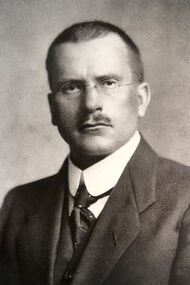
The term synchronicity comes from the German Synchronizität and was introduced by Swiss psychologist Carl Gustav Jung, the founder of analytical psychology. It refers to events that happen at the same time and seem meaningfully connected, despite there being no discoverable causal mechanism linking them.
For example, a person may dream about an old friend and unexpectedly receive a message from that friend the following morning. A synchronistic interpretation does not necessarily claim that the dream caused the message or that the message caused the dream. Instead, it treats the coincidence itself as potentially meaningful.
Jung regarded synchronicity as a normal and potentially healthy function of the mind. He believed it could bring unconscious thoughts, feelings, or inner conflicts into awareness. However, he also warned that an excessive sense that everything is connected can become harmful, especially in psychosis or schizophrenia-related delusions.
In Jung's framework, synchronicity was a hypothetical acausal connecting principle. In simpler words, it was meant to describe a connection based not on physical cause and effect, but on shared meaning. Jung believed causal explanations help people understand the external world, while synchronistic explanations may help them understand the relationship between their inner lives and outer events.
A crucial distinction is made between synchronicity and magical thinking. Magical thinking claims that unrelated events have a hidden paranormal causal connection. Jung's synchronicity, by contrast, proposes that events may have no causal relationship at all, while still being linked by an unknown, meaningful, non-causal pattern.
2. Early Sources and the I Ching
Jung's path toward synchronicity began with his interest in the ancient Chinese divination text, the I Ching, or Book of Changes. The text is built around 64 hexagrams, each made from combinations of six broken or unbroken lines. Traditionally, a person consults it through procedures involving chance, such as coin tossing or counting yarrow stalks.
The idea behind the I Ching is that a seemingly random result can still provide an insightful reflection of someone's present situation or inner state. Jung found this approach appealing because it did not rely on normal cause-and-effect reasoning. Instead, it treated chance events as meaningful in context.
Jung's interest was strengthened by Richard Wilhelm, the influential translator and interpreter of Chinese texts. Jung encountered Wilhelm and his work in Zurich and Darmstadt during the 1920s. When Wilhelm's translation and commentary on the I Ching appeared, Jung believed he had found someone who shared his sense that meaningful connections could exist outside conventional causality.
"I Ching was published with Wilhelm's commentary. I instantly obtained the book and found to my gratification that Wilhelm took much the same view of the meaningful connections as I had."
Jung appears to have coined the word synchronicity sometime between 1928 and 1930. His first public use came in a 1930 memorial address for Wilhelm, where he described the divinatory method of the I Ching as founded on a different principle from causality:
"The science [i.e. cleromancy] of the I Ching is based not on the causality principle but on one which—hitherto unnamed because not familiar to us—I have tentatively called the synchronistic principle."
Jung came to believe that the I Ching could provide meaningful readings, based partly on his personal experiences. He later recommended it to some patients. In his view, Chinese philosophy more broadly contained ideas compatible with synchronicity, especially Taoist ideas about the interconnectedness of events and the rhythms of nature.
He also drew from several Western thinkers. Gottfried Leibniz, who had encountered I Ching divination in the seventeenth century, was an important precursor. Jung also cited Arthur Schopenhauer and Johannes Kepler. In particular, Schopenhauer had described two kinds of connections in a person's life: an objective causal network and a subjective pattern experienced as personal destiny.
"All the events in a man's life would accordingly stand in two fundamentally different kinds of connection: firstly, in the objective, causal connection of the natural process; secondly, in a subjective connection which exists only in relation to the individual who experiences it, and which is thus as subjective as his own dreams."
Jung also found inspiration in Paul Kammerer's theory of seriality, which proposed that coincidences may reflect hidden patterns in nature. Other influences included astrology, alchemy, sympathetic magic, theological correspondences, religious experience, and the concept of numinosity—the powerful, awe-filled quality sometimes associated with encounters with the sacred.
3. Jung and Wolfgang Pauli
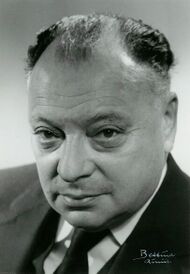
A major development in Jung's theory came through his relationship with the Nobel Prize–winning physicist Wolfgang Pauli. Jung and Pauli began a long correspondence in 1932, discussing psychology, physics, dreams, symbolism, paranormal claims, and the strange relationship between observer and observed phenomena.
Their collaboration reached its clearest public form in 1952, when they published The Interpretation of Nature and the Psyche. Jung's contribution was his central essay, "Synchronicity: An Acausal Connecting Principle." By this time, Jung had spent more than two decades developing the idea and had given his first major lecture on it at the 1951 Eranos Conference.
Their shared project later became known as the Pauli–Jung conjecture. Developed especially between 1946 and 1954, it attempted to create a broader philosophical framework in which mind and matter might be understood as two expressions of a deeper underlying reality.
Pauli brought concepts from quantum theory into the discussion, including:
- Complementarity: apparently opposing descriptions can both be needed to understand reality.
- Nonlocality: quantum systems can show correlations across distance without ordinary local interaction.
- Observer effects: observation can play a role in how quantum phenomena are described or measured.
- Quantum entanglement: particles can remain correlated in ways that cannot be explained by simple classical mechanisms.
Jung and Pauli did not claim that quantum physics scientifically proved synchronicity. Rather, they saw quantum phenomena as suggestive examples of a world in which not every meaningful connection needs to look like ordinary physical causation.
Their bold proposal shifted the focus from numerical probabilities toward qualitative meaning:
"The currency of these correlations is not (quantitative) statistics, as in quantum physics, but (qualitative) meaning."
Contemporary physicist Thomas Filk has suggested that quantum entanglement is perhaps the physical phenomenon most analogous to the idea of synchronicity. Still, this remains an analogy or philosophical comparison, not an accepted scientific explanation of meaningful coincidences.
4. Synchronicity in Analytical Psychology
Within Jung's analytical psychology, synchronistic experiences may function as moments when unconscious material becomes visible to the conscious mind. A coincidence becomes psychologically important not simply because it is strange, but because it may point a person toward emotions, conflicts, desires, or possibilities they have not fully recognized.
According to this view, the outcome depends on how the person responds. A meaningful coincidence might support insight and development, or it might become confusing and destabilizing if interpreted rigidly or obsessively.
Jung believed modern people are trained to emphasize causal explanations. If one thing cannot be shown to cause another, it is often treated as mere chance. But Jung thought the psyche also contains older or more "primordial" modes of thinking that naturally seek intention, symbolism, and meaning in events.
For Jung, this did not mean modern scientific thinking was wrong. Instead, he argued that human beings use more than one interpretive framework. Causality is one way of organizing experience; synchronicity is another.
He placed synchronicity among three major psychological principles:
-
Psychological causality: mental events may result from earlier causes, such as repressed feelings or unconscious conflicts. Jung broadened Freud's notion of libido into a more general psychic energy involved in individual development.
-
Psychological teleology: the psyche may move toward a goal, especially self-actualization or individuation—the process of becoming a more integrated person.
-
Psychological synchronicity: meaningful chance events can support or hinder that developmental process.
Jung believed synchronicity helped explain his concepts of archetypes and the collective unconscious. Archetypes are recurring symbolic patterns—such as the mother, hero, shadow, wise old figure, or trickster—that Jung believed structure human imagination and experience across cultures.
For him, synchronicity could appear when an archetypal pattern was active in someone's inner life and seemed to echo through events in the outer world. This was part of Jung's movement away from a strict mind–body split, often associated with Cartesian dualism, toward a double-aspect theory: mind and matter may be distinct aspects of a more fundamental reality.
5. Science, Paranormal Claims, and Therapy
Jung believed synchronicity had both philosophical and scientific implications. He contrasted what he saw as a Western preference for causality with an Eastern willingness to treat coincidence as meaningful:
"The East bases much of its science on this irregularity and considers coincidences as the reliable basis of the world rather than causality. Synchronism is the prejudice of the East; causality is the modern prejudice of the West."
He consulted modern physicists, including Pauli and Albert Einstein, while trying to develop his theory. Yet Jung also extended synchronicity into paranormal territory. He used it to discuss astrology, extrasensory perception (ESP), parapsychology, and other phenomena that he thought might resist ordinary causal explanation.
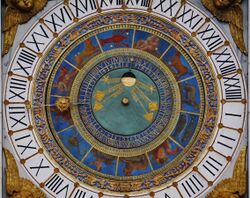
For Jung, astrology represented a possible example of a parallel, non-causal relationship between celestial arrangements and events in human life. He also drew on the work of parapsychologist J. B. Rhine, whose experiments initially appeared to support claims about ESP. Critics later strongly challenged this evidence and its implications.
Jung described synchronicity as a concept appropriate where causation appears impossible to establish:
"How are we to recognize acausal combinations of events, since it is obviously impossible to examine all chance happenings for their causality? The answer to this is that acausal events may be expected most readily where, on closer reflection, a causal connection appears to be inconceivable."
He argued that if an experience such as ESP or a meaningful coincidence could not be explained as a transfer of energy, then it could not be understood in ordinary causal terms:
"Therefore it cannot be a question of cause and effect, but of a falling together in time, a kind of simultaneity."
He chose the name synchronicity because of this "falling together in time," proposing it as a hypothetical explanatory principle equal in rank to causality.
Synchronicity in therapy
Modern clinical interest in synchronicity is more cautious. It tends to focus not on proving paranormal claims, but on understanding what these experiences mean to patients and how therapists should respond.
Research mentioned in the article includes several findings:
- A 2009 study found that experiences interpreted as synchronistic often cluster around emotionally intense periods and major life changes, including birth, death, and marriage.
- A 2016 study found that clients who report unusual or synchronistic experiences often feel dismissed, unheard, unaccepted, or misunderstood.
- Another 2016 survey of 226 therapists found that 44% had encountered synchronicity in therapeutic work, while 67% believed such experiences could be useful in therapy.
- Psychologists were more likely than counsellors or psychotherapists to attribute these experiences to chance coincidence. Counsellors and psychotherapists were more open to interpreting them as unconscious material seeking expression.
- A 2018 study argued that carefully recognizing and discussing a synchronistic moment can contribute positively to the therapeutic relationship, especially when it helps the patient create a coherent and meaningful narrative.
Analytical psychologists emphasize that the goal should not be to increase superstition. Instead, a person should explore what a coincidence means psychologically and whether it reveals something important about their current life situation.
However, there is an important clinical boundary: an overwhelming conviction that ordinary events are full of special personal messages may also occur in schizophrenia or psychosis. In those situations, treating every coincidence as objectively meaningful can reinforce harmful delusional beliefs rather than support insight.
6. Scientific Criticism and Alternative Explanations
From a mainstream scientific perspective, synchronicity is highly controversial. The central objection is that it is not clearly testable or falsifiable. If a claim cannot be clearly tested and potentially proven wrong, it falls outside ordinary empirical science.
Scientific skeptics commonly label Jung's synchronicity theory pseudoscience, especially where it is used to support astrology, ESP, or paranormal forces. The fact that an event feels meaningful to someone does not, on its own, demonstrate that the event has objective or cosmic meaning.
Probability theory offers a more conventional explanation. Events that seem astonishingly unlikely may be inevitable across a large number of daily experiences. People remember dramatic coincidences, while forgetting the enormous number of thoughts, dreams, encounters, and predictions that do not match anything.
Psychological explanations include:
- Confirmation bias: noticing and remembering evidence that supports one's beliefs while overlooking contradictory cases.
- Apophenia: the human tendency to see meaningful patterns in random or unrelated information.
- Spurious correlation: interpreting two events as connected when the relationship is accidental.
- Underestimating probability: assuming a rare event is impossible or supernatural because one does not appreciate how often opportunities for it arise.
- The look-elsewhere effect: when many possibilities are available, finding one apparent match becomes much more likely than it initially appears.
Skeptic Robert Todd Carroll argued that synchronicity experiences are better understood as apophenia. Across a lifetime, he said, people should naturally expect to encounter several startling coincidences without needing Jung's metaphysical explanation.
Statistician David J. Hand similarly argued that rare and striking coincidences should be expected under ordinary probability theory:
"There's no need to conjure up other forces or ideas, and there's no need to attribute mystical meaning or significance to their occurrence. In fact, we should expect them to happen, as they do, purely in the natural course of events."
Psychologist Fritz Levi, writing in 1952, criticized Jung's theory as vague. He argued that Jung had not clearly explained what counts as a synchronistic event or adequately distinguished synchronicity from "magic causality."
Even parapsychologist Charles Tart warned that synchronicity could encourage intellectual complacency:
"Sloppy use of the concept of synchronicity then becomes a way of being intellectually lazy and dodging our responsibilities."
Tart's concern was that people might give up searching for causal explanations too quickly whenever experiments fail to produce expected results.
A 2015 paper by M. K. Johansen and M. Osman offered a related critique:
"As theories, the main problem with both synchronicity and seriality is that they ignore the possibility that coincidences are a psychological phenomenon and focus instead on the premise that coincidences are examples of actual but hidden structures in the world."
In other words, the key question is whether coincidences reveal an external hidden order—or whether human minds naturally construct meaning from patterns, especially during emotionally intense moments.
7. Proposed Scientific and Quasi-Scientific Models
Although mainstream science does not accept synchronicity as an established phenomenon, some researchers have tried to frame it through physical, cognitive, or systems-based models.
Jung himself speculated that mathematical patterns, including the Fibonacci sequence, might somehow be relevant to synchronistic order. This remained speculation rather than a developed empirical theory.
Physicist Gregory S. Duane proposed a "chaotic oscillator" model. His work draws analogies between synchronised chaos in complex systems and Jung's concept of acausal order. In some physical systems, components can become coordinated through complicated nonlinear dynamics. Duane suggested that such processes could provide a physical analogy for how coincidences might appear patterned without a simple direct cause.
The Pauli–Jung conjecture has also continued to interest scholars who explore connections between consciousness, quantum theory, and philosophy. Concepts such as entanglement and nonlocality are sometimes used as metaphors for mind–matter relations. However, the article stresses that these should not be treated as literal scientific explanations for personal coincidences.
Cognitive science takes a different approach. Johansen and Osman argue that perceived coincidences can emerge from ordinary rational cognition, heuristics, attention, and confirmation bias. From this perspective, synchronicity may be psychologically real as an experience—people genuinely feel that events are connected—but that does not establish an acausal connection in the world itself.
All of these approaches share an interest in the same puzzle: why do some coincidences feel unusually powerful, personally relevant, or charged with meaning? Their answers differ sharply, ranging from hidden physical analogies to ordinary mental pattern recognition.
8. Famous Examples of Synchronicity
Jung's golden scarab

Jung's best-known example involves a young woman he was treating. She was, according to Jung, difficult to help because of an extremely rigid and rationalistic attitude. At a critical point in therapy, she described a dream in which someone gave her a golden scarab.
As she told Jung about the dream, he heard tapping on the window behind him. He turned around and found a beetle trying to enter. He opened the window, caught it, and discovered that it was a rose chafer, Cetonia aurata—the closest local equivalent to a golden scarab.
"It was the nearest analogy to a golden scarab that one finds in our latitudes, a scarabaeid beetle, the common rose-chafer (Cetonia aurata)."
Jung gave the beetle to his patient, telling her, "Here is your scarab." He believed the striking coincidence disrupted her rigid worldview enough to allow therapeutic change.
"When the 'scarab' came flying in through the window in actual fact, her natural being could burst through the armor of her animus possession and the process of transformation could at last begin to move."
For Jung, the point was not that the beetle had been magically summoned. Instead, its arrival at the exact moment of the dream report had a symbolic and emotionally transformative impact.
He later remarked:
"When coincidences pile up in this way, one cannot help being impressed by them—for the greater the number of terms in such a series, or the more unusual its character, the more improbable it becomes."
Émile Deschamps and the plum pudding
French writer Émile Deschamps recorded another celebrated coincidence. In 1805, he was offered plum pudding by a stranger named Monsieur de Fontgibu. Ten years later, Deschamps saw plum pudding on a Paris restaurant menu and tried to order it, only to be told that the final serving had already gone to another customer—Fontgibu.
Then, in 1832, Deschamps attended a dinner and again ordered plum pudding. He told his friends that the scene would only be complete if Fontgibu appeared. At that very moment, the elderly Fontgibu entered the room after mistakenly going to the wrong address.
The story is often cited as a vivid example of an unlikely repeated coincidence, though it is anecdotal rather than scientific evidence.
The "Pauli effect"
Wolfgang Pauli was famous among colleagues for stories that laboratory equipment mysteriously malfunctioned when he was nearby. This humorous supposed pattern became known as the Pauli effect.
Physicist George Gamow recounted a tale in which complicated equipment collapsed in a Göttingen laboratory for no apparent reason. The laboratory's director later wrote jokingly to Pauli, who replied that he had been traveling through Göttingen at the time and that his train had stopped there briefly.
"Pauli was such a good theoretical physicist that something usually broke in the lab whenever he merely stepped across the threshold."
Gamow made no serious attempt to establish this as scientific fact. The anecdote is better understood as a piece of scientific folklore, illustrating the playful reputation Pauli acquired among fellow physicists.
9. Synchronicity in Popular Culture
Jung's idea has had a major cultural afterlife, particularly in spirituality, fiction, music, and New Age thought.
Science-fiction writer Philip K. Dick referred to "Pauli's synchronicity" in his 1963 novel The Game-Players of Titan. In the novel, the phrase concerns psychic abilities and refers to an "acausal connective event."
The Police released their 1983 album Synchronicity, inspired by Arthur Koestler's The Roots of Coincidence. The album includes "Synchronicity II," which presents two seemingly parallel stories: one about a man undergoing a psychological breakdown and another about a monster rising from a Scottish lake.
Icelandic musician Björk wrote a song called "Synchronicity" for Spike Jonze's Hot Chocolate DVD. The group Rising Appalachia also released a song titled "Synchronicity" on its 2015 album Wider Circles.
These cultural uses show how the idea has moved beyond Jungian psychology. In popular language, "synchronicity" often simply means a coincidence that feels surprisingly perfect, fated, or meaningful.
Conclusion
Synchronicity remains one of Jung's most provocative ideas: a proposal that meaningful coincidence can sometimes connect inner experience and external events without ordinary causation. Its influence is visible in analytical psychology, psychotherapy, spirituality, literature, and music, especially through memorable cases like Jung's golden scarab.
At the same time, the theory has not gained scientific acceptance. Critics argue that probability, confirmation bias, apophenia, and other cognitive processes provide more testable explanations for apparently extraordinary coincidences. The most balanced reading is that synchronistic events can feel deeply significant and may be useful to explore psychologically—while that subjective meaning alone does not prove a hidden force, paranormal mechanism, or objective acausal order in nature.
Need a summary like this?
Get instant summaries with Harvest